ASK QUOTATION LIST
How We Manufacture High-Grade Polystone for Importers
How We Manufacture High-Grade Polystone for Importers
Polystone is a lightweight composite with a natural stone look. Therefore, many importers and distributors choose polystone planters for retail channels and landscape projects. However, consistent quality across batches depends on the production process.
Rosa Planters controls the full chain to manufacture high-grade polystone in Vietnam. As a polystone manufacturing company, we supervise every stage, from raw materials to the container. As a result, importers receive stable products that match the approved sample and the agreed schedule.
Every planter is made by hand. Our polystone manufacturing process has six steps: materials, mold preparation, layered casting, curing and grinding, finishing, and inspection and packing.
Step 1: Material Selection and Mixing
What Polystone Is Made Of
A polystone planter body consists of several layers. The poly mixture combines poly resin, granite stone powder and sandstone. In addition, each planter contains alternating layers of fiberglass mesh.
Each component has a clear role. The resin binds the materials and makes the planter water-resistant. The granite powder and sandstone create the natural stone surface. Meanwhile, the fiberglass mesh reinforces the structure and keeps the planter light yet strong.
Quality Control of the Mixture
Our workers mix the resin, granite powder and sandstone thoroughly before casting. A uniform mixture helps the layers bond firmly. Moreover, color and hardness stay consistent across a batch.
In addition, our QC staff monitor mixing ratios and incoming material quality. Consequently, the team spots risks such as cracking or deformation early. For importers, this reduces defect rates and claim costs. This level of control defines high-grade polystone manufacturing.
Step 2: Mold Preparation
Checking Molds Against Approved Samples
The mold determines the shape and size of each planter. Therefore, mold makers work from drawings and samples that the customer has approved. They also verify mold dimensions before mass production begins.
When a customer requests a custom design, our engineers advise on shape and wall thickness. They also review details such as drainage holes. Drainage holes are essential for outdoor planters.
Mold Maintenance
A worn or dirty mold distorts the product. For this reason, our workshop cleans and inspects molds regularly. As a result, every planter keeps a consistent shape across repeat orders.
Step 3: Layered Casting by Hand
The First Poly Layer
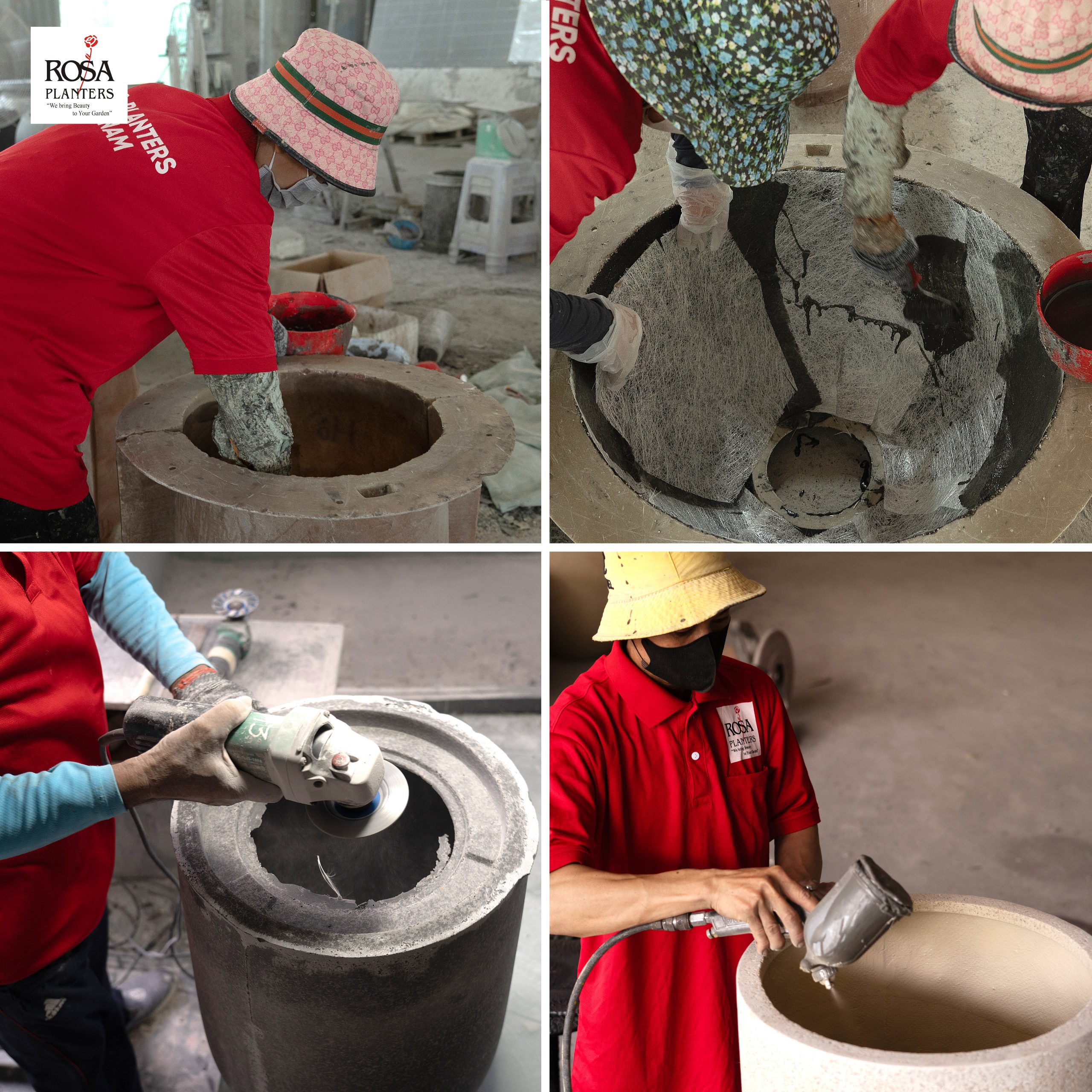
First, the worker wears gloves and applies a layer of poly mixture into the mold. They use their hands or a brush, depending on the planter’s shape. Then they wait about 5 minutes for the layer to set.
The Fiberglass Mesh Layer
Next, the worker places a layer of fiberglass mesh on top. They wait another 5 minutes before the next step. This mesh layer helps the planter carry load.
Repeating Until the Target Thickness
The worker keeps alternating poly mixture and fiberglass mesh. They stop once the wall reaches the required thickness. This method gives precise control over thickness at every point. Furthermore, it suits many shapes and sizes.
The layered structure makes polystone far lighter than cement planters. Consequently, importers save on freight and improve their margins.
Step 4: Curing, Demolding and Grinding
Curing Time
After casting, the planter needs time to dry completely. Depending on size, this takes between 2 and 12 hours. Small planters dry faster, while large ones need more time.
Overall, the production cycle averages 5 days to 1 week, covering molding, curing and finishing. Therefore, polystone offers a clear lead-time advantage over ceramic and cement. Importers can shorten waiting periods and plan inventory more flexibly.
Demolding and Surface Preparation
Once the planter is fully dry, the worker removes it from the mold. Then they grind off excess poly with a hand grinder. After that, they sand the entire surface. This produces a smooth, even finish.
Step 5: Surface Finishing
Applying the Sealer
After sanding, the worker sprays a sealer over the whole product. The sealer protects the surface and extends outdoor durability. In addition, spraying gives an even coat on complex details.
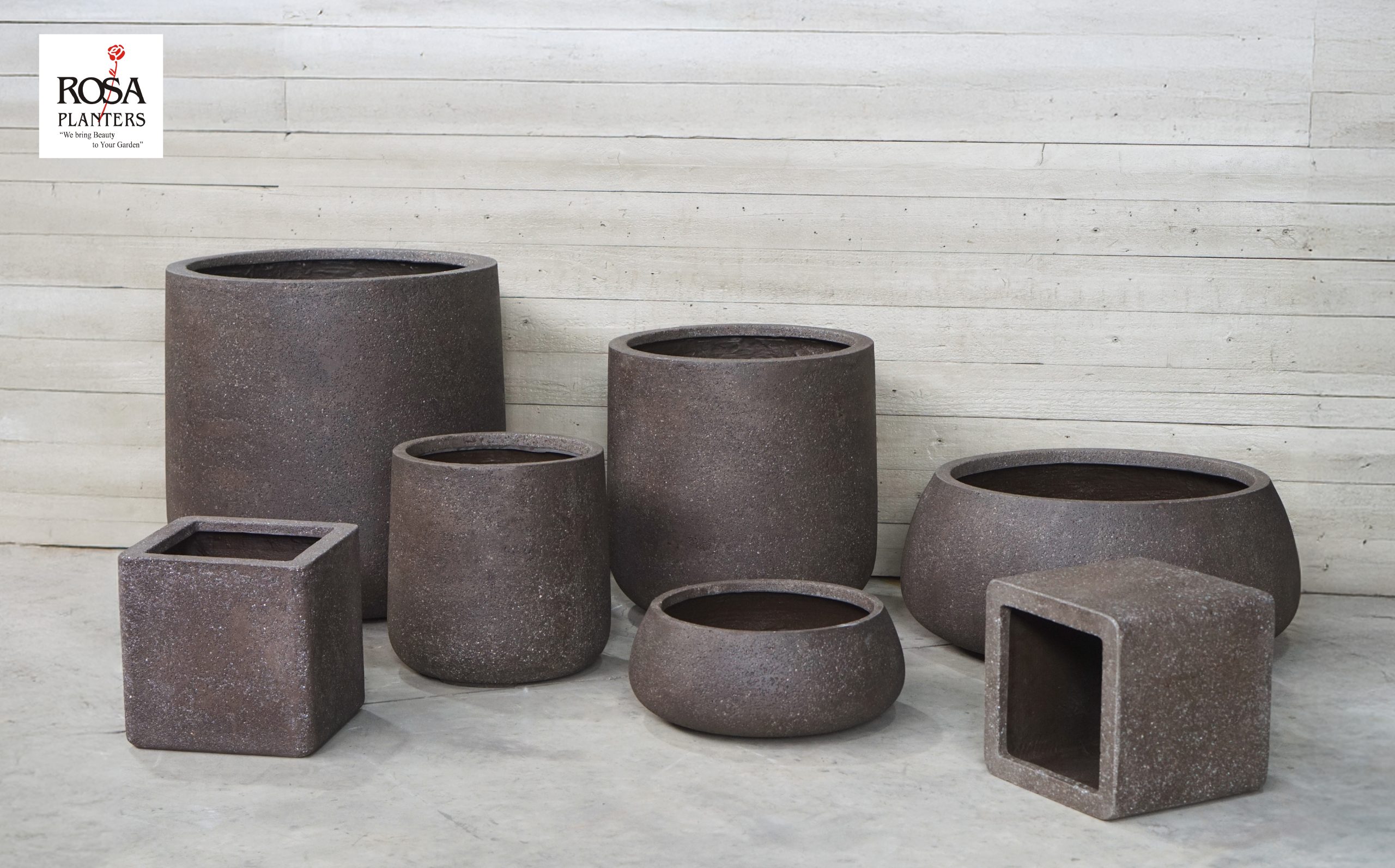
Color and Surface Texture
Polystone planters are handmade. Therefore, slight color variation can occur between pieces. We state this clearly from the start, so our customers can set expectations with their end buyers.
Meanwhile, our QC team compares each batch with the approved master sample. This keeps color within the agreed tolerance.
Step 6: Quality Inspection, Packing and Export
Inspection at Every Stage
Our QC staff inspect products at several stages, not only at the end. Consequently, they catch defects early and fix them quickly. They check dimensions, thickness, surface, color and drainage holes. At the same time, they remove any piece that fails the standard.
This discipline is what separates a reliable polystone manufacturer from a simple trading channel.
Independent Test Documentation
Depending on customer and market requirements, Rosa Planters provides test documentation from reputable organizations such as SGS and BV. Therefore, importers gain extra support to meet regulations in their own markets.
Packing and Container Loading
Packing decides whether planters arrive intact. For this reason, we protect each product with suitable cushioning. Then our team loads the planters into cartons and onto pallets according to the container plan.
Furthermore, polystone is light, so each container holds more planters. As a result, the freight cost per unit drops. Finally, our QC team rechecks quantities, labels and loading before the container leaves the warehouse.
Work Directly With Our Engineering & Sourcing Team
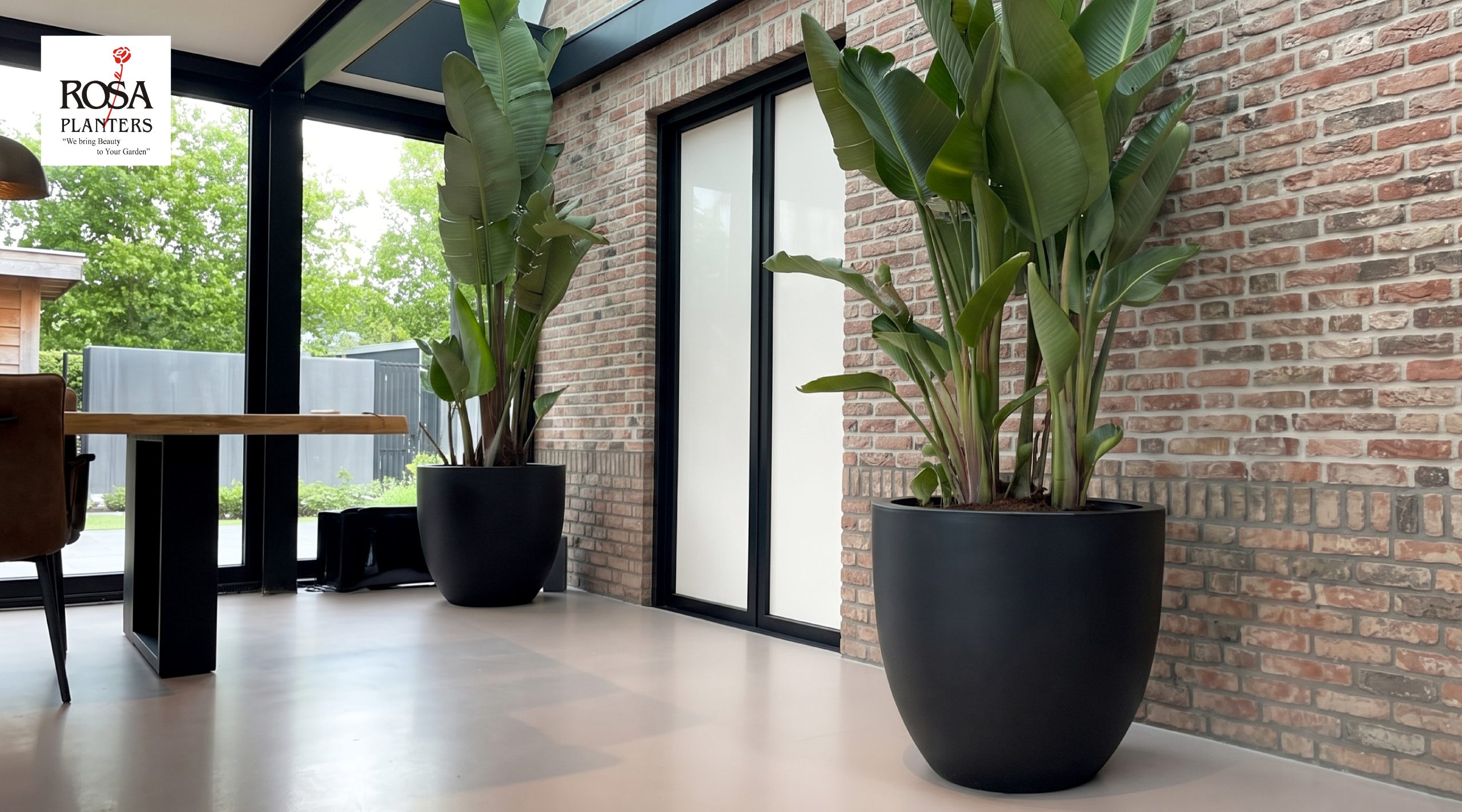
A clear process delivers consistent polystone quality. Therefore, Rosa Planters controls every step, from materials to packing. At the same time, we give technical advice for each order and each market.
If you need a dependable high-quality polystone manufacturer, talk to us. Speak to Our Engineering & Sourcing Team for guidance on designs, materials, lead times and pricing.
