ASK QUOTATION LIST
What to Look for When Choosing a Plant Pot Manufacturer?
What to Look for When Choosing a Plant Pot Manufacturer?
Choosing the wrong plant pot manufacturer can cost you time, money, and customers. Problems often appear with your very first shipment. However, price alone should never drive your decision. Importers and distributors need to verify technical capability with data. This guide covers the criteria to check before you sign a contract.
Experience: Process Knowledge Prevents Defects
An experienced plant pot factory understands how each material behaves in production. In addition, it anticipates defects in molds and material formulas before they reach your order. New factories may quote attractive prices. However, they often repeat mistakes that veteran suppliers solved years ago.
Ask direct questions when you evaluate a new supplier. How long has the factory operated? Which international clients does it serve? Can it share case studies or inspection reports? A professional supplier answers these questions openly and with documents.
Production Capacity: Verify with Numbers
Never ask a vague question like “What is your capacity?” Instead, request concrete data from the planter manufacturer. These figures reveal far more than a brochure about a “large-scale factory.”
Ask for these figures:
-
-
- • Number of machines or kilns in operation
- • Average daily output for each product line
- • Average defect rate over the last three months
-
The defect rate deserves special attention. It shows how stable the process is, not only how fast it runs. A high output with a high defect rate means unreliable delivery.
In addition, ask about lead time in peak and low seasons. A factory with limited capacity may handle small orders well. However, it often misses deadlines on large orders. This risk grows before festivals and trade shows.
Materials and Technical Specifications
Every material follows its own production process and technical limits. Therefore, understanding these details helps you assess a supplier’s real skill. Vague descriptions tell you very little.
Polystone (Resin Stone Powder)
Polystone is a composite of resin, stone powder, and fiberglass. Factories cast it in composite molds. The mix ratio of stone powder to resin controls hardness and brittleness. Too much filler makes the pot hard but fragile. Therefore, a good factory sets this ratio deliberately and keeps it consistent.
Workers also place 2–3 fiberglass layers between the resin-stone layers. This reinforcement improves the pot’s resistance to cracking under load and impact. Standard wall thickness ranges from 4 to 6 mm, depending on pot size.
Polystone weighs 40–60% less than traditional ceramic. Nevertheless, it keeps a surface texture similar to cement or natural stone. Lower weight also reduces freight cost per container. Finally, the factory coats the surface with sealer. The sealer resists scratches and stains and helps the color last.
Ceramic and Terracotta
Ceramic production starts with shaping in plaster molds or slip casting. Next, workers apply glaze if the design calls for it. The pots then dry naturally. This step is critical. Moisture trapped inside a wet pot turns to steam during firing and cracks the body. Force-drying causes similar cracks.
After complete drying, the kiln fires the pots at 700–1,200°C, depending on the clay. Firing temperature directly affects glaze color, porosity, and water resistance. Higher temperatures reduce porosity. Consequently, the pot absorbs less water and resists freeze cracking in cold climates.
Terrazzo and Fiber Concrete
Terrazzo production begins when workers pour cement and fine granite or marble into a mold. They then vibrate or compress the mix to remove air bubbles. Trapped air weakens the finished pot, so this step directly affects strength.
Curing follows and lasts at least 7–14 days. Pot size and weather conditions determine the exact time. The fiber concrete needs this period to gain strength. Insufficient curing commonly causes cracks during transport. Therefore, ask about curing schedules before you order. After curing, the factory applies the same sealer coat for scratch, stain, and color protection.
MOQ: Tied to Tooling Cost
MOQ in this industry depends heavily on tooling cost. Metal injection molds can cost from a few thousand to tens of thousands of USD. Consequently, factories usually set a high MOQ for new designs. This lets them recover the mold investment.
In contrast, plaster molds for ceramics and composite molds cost less. As a result, a custom plant pot manufacturer can offer more flexible MOQs on these materials.
Always ask how the factory applies MOQ. Does it count per mold, per color, or per total order? Each method changes your real cost significantly. Moreover, negotiate if you are testing a new market. Many factories reduce MOQ for buyers with long-term potential.
Quality Control (QC): Checks at Every Stage
Weak QC is the leading cause of returned goods. A solid process therefore follows each production stage closely. A wholesale plant pot manufacturer should run three checkpoints.
Three QC Checkpoints
-
-
- • Incoming quality control (IQC): The team measures clay moisture, checks the plastic’s melt flow index (MFI), and verifies the cement mix ratio. MFI shows how consistently a resin batch flows when molten.
- • In-process quality control (IPQC): Inspectors monitor the molding process. They measure rim, wall, and base thickness at multiple points. For ceramics, they also check glaze color consistency.
- • Final quality control (FQC): Inspectors run a visual inspection against an AQL 2.5 or 4.0 defect chart. In addition, they perform a drop test, a water load test, and a stability test on a flat surface.
-
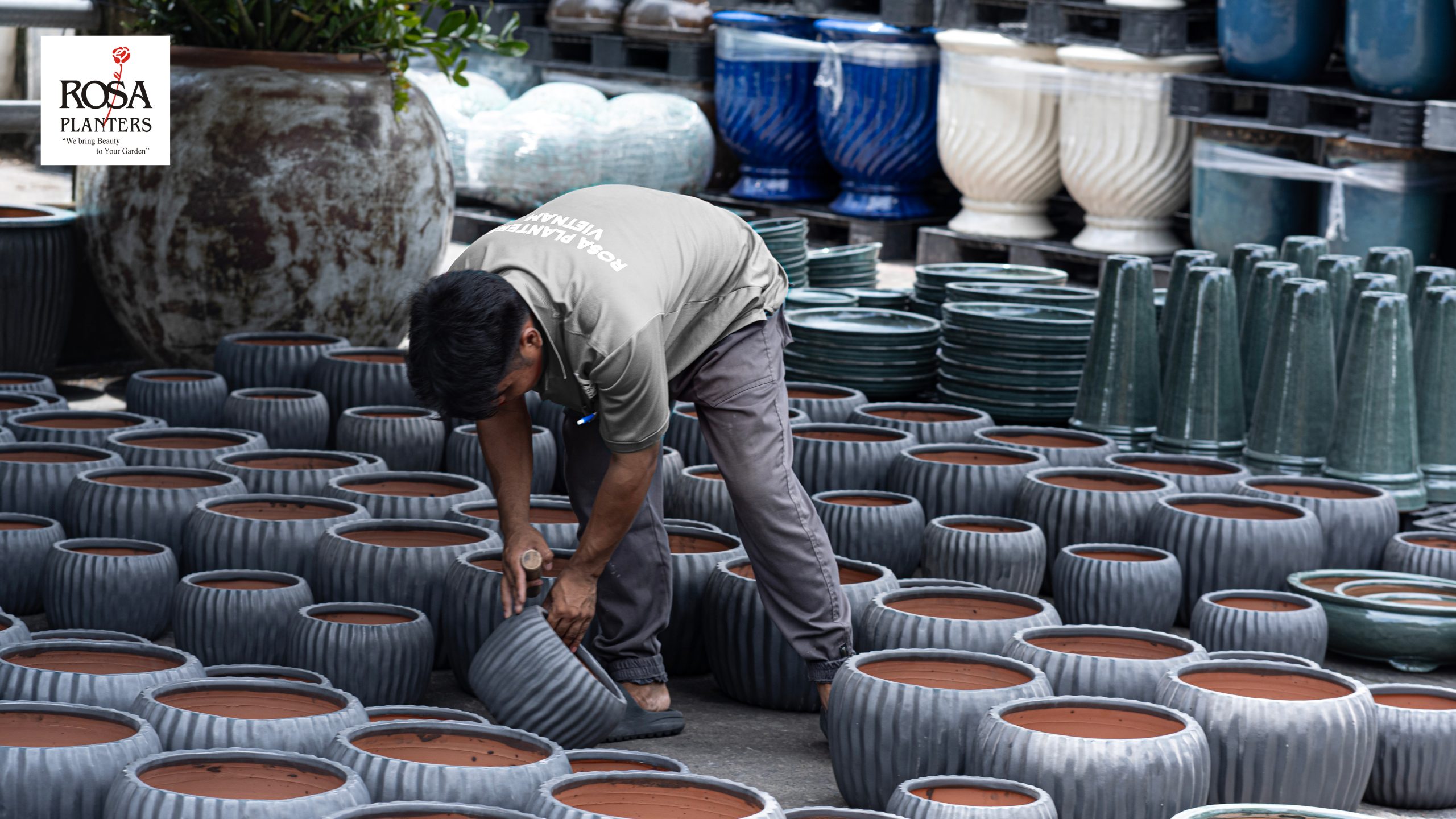
Each FQC test targets a real-world failure. The drop test simulates handling damage. The water load test checks the pot under full weight. The stability test confirms the pot will not tip when planted.
Independent third-party reports add further confidence. Look for inspectors such as SGS, Intertek, or Bureau Veritas. These reports are especially valuable for high-value export orders.
Export Experience: Packaging Engineering
Long-distance shipping demands different packaging for each material. Ceramic pots need layered EPE foam to absorb impact. Heavy terrazzo pots need strong wooden pallets. Plastic pots usually nest inside each other to maximize container space.
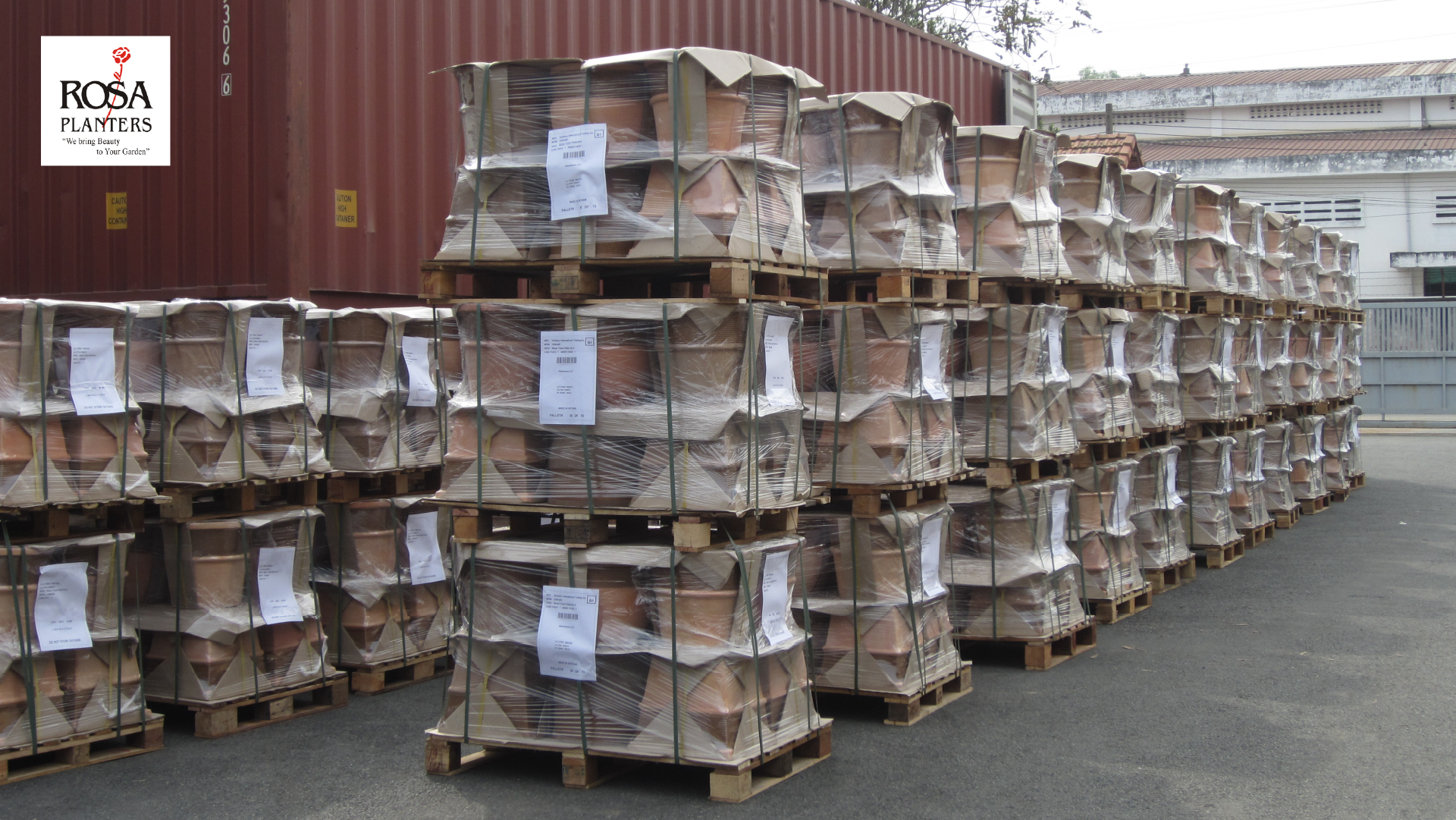
A good international plant pot manufacturer advises you on packaging for your specific shipping route. It does not apply one method to every order.
Planning your own brand? Then ask about OEM plant pots and private label plant pots. With OEM, the factory molds your logo directly into the tooling. With private label, it applies your labels and custom packaging. These options differ in cost and production time.
Finally, confirm the factory understands customs declarations and certificates of origin. It should also know the safety standards of your target market.
Planning to buy from Vietnam? Then read our guide to plant pot sourcing in Vietnam. It covers the sourcing process in more detail. Consequently, you can combine both guides into one complete supplier checklist.
Technical Communication
Clear communication shows real capability. Send specific technical questions early. For example, ask about wall thickness, firing temperature, or water absorption. Then check whether the answers include accurate figures or only general claims.
A true technical team responds to the point within 24 hours. Ideally, it also assigns a dedicated account manager to your account. This single contact prevents confusion and keeps your project on schedule.
Final Thoughts
A strong plant pot manufacturer offers more than a low price and a small MOQ. It shows depth in capacity, materials, QC, and export experience. Therefore, invest time in careful evaluation at the start. This effort protects you from quality problems and delivery delays.

Ready to compare suppliers? Request a quotation and ask for the technical data sheet with it. That way, you can judge each option on facts.