ASK QUOTATION LIST
Polystone vs. Fiber Concrete & Ceramic: How Material Choice Impacts Shipping Costs and Retail Margins
Polystone vs. Fiber Concrete & Ceramic: How Material Choice Impacts Shipping Costs and Retail Margins
For plant pot importers, material determines landed cost. Design is only one part of the equation. Weight, lead time, and breakage rates create the real differences in profit.
This article compares three common materials: polystone, fiber concrete, and ceramic. We follow a clear sequence: weight, durability, production time, breakage, shipping, and retail margin. As a result, retailers and designers can match the right material to their sourcing plans.
Weight: The First Variable in Landed Cost
Weight affects freight charges, handling costs, and warehouse operations. Therefore, businesses should assess weight before they compare ex-factory prices.
Polystone Is Lighter Than Fiber Concrete and Ceramic
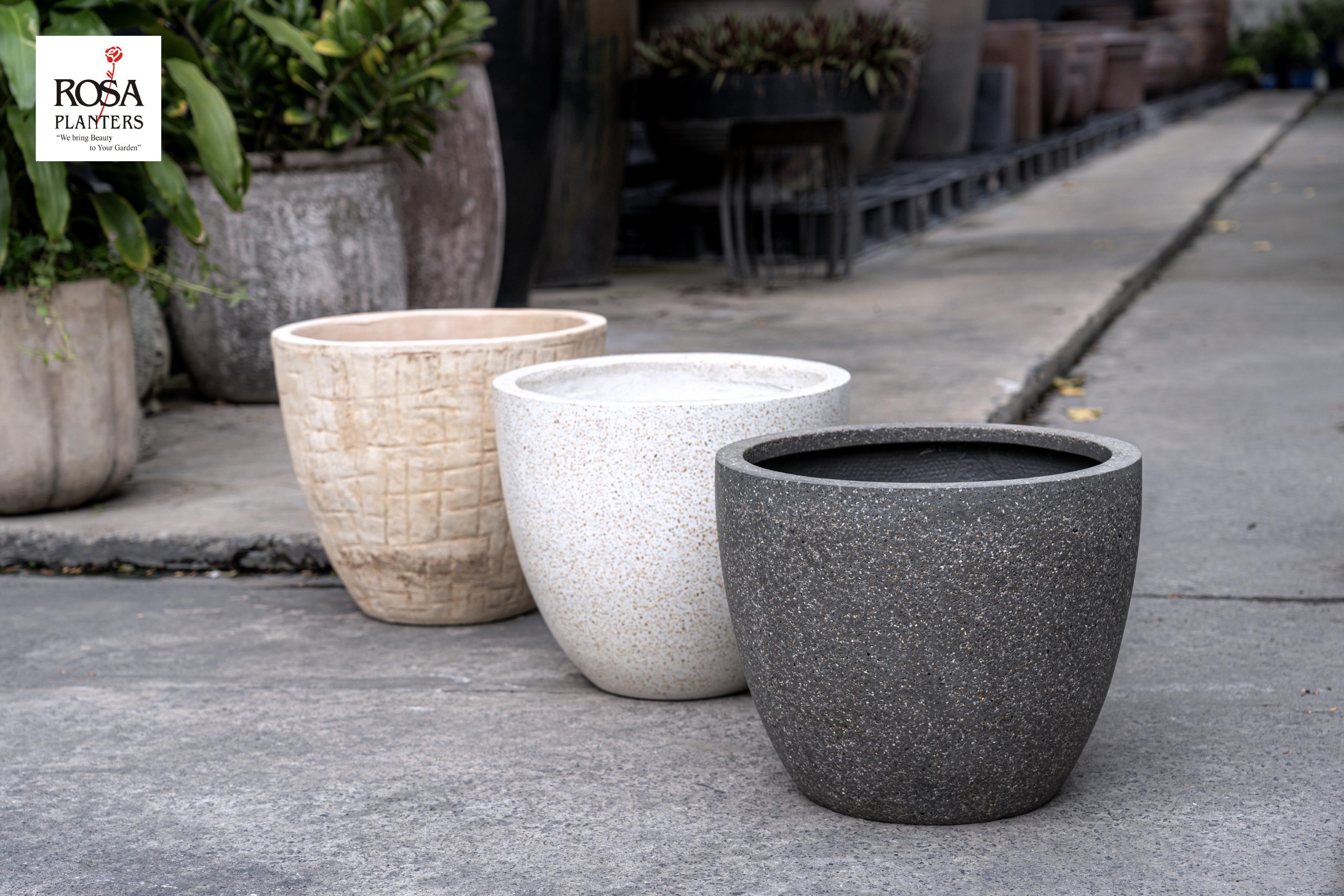
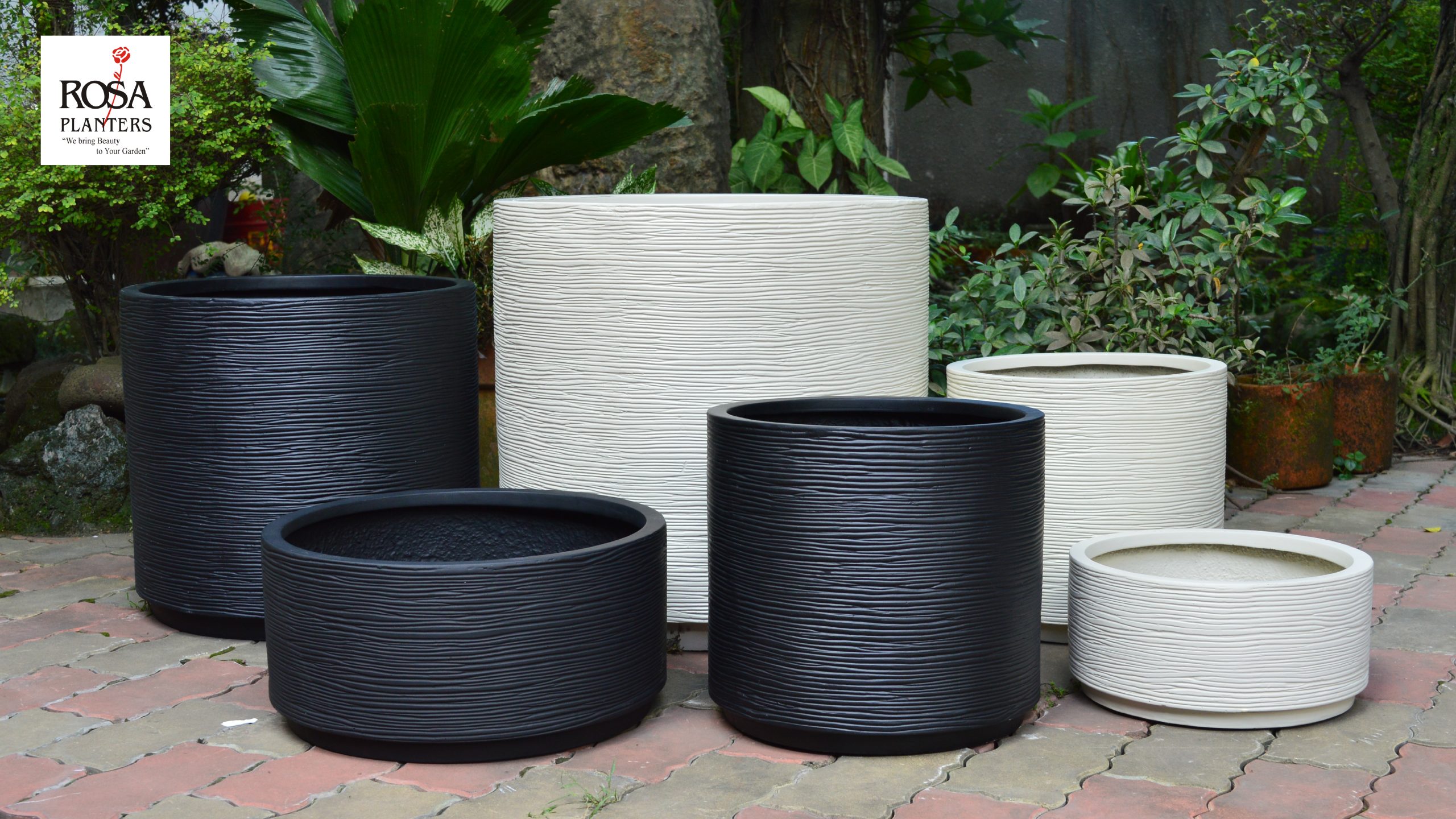
Polystone, which buyers also call fiberstone, is a composite material. It combines high-grade polymer resin, stone powder, and reinforcing fibers. This structure lets factories produce thin but strong pot walls. Consequently, a polystone pot weighs far less than a fiber concrete pot of the same size.
Ceramic is also heavy. Its walls must stay thick enough to survive firing. In addition, the glaze adds more weight. For large sizes, the difference is easy to see.
Weight Determines Container Efficiency
Every 20-foot or 40-foot container has a weight limit. When pots are too heavy, the container reaches its weight limit before it runs out of space. As a result, importers pay freight for empty volume.
Lighter pots solve this problem. Each container holds more units, so freight cost per pot drops. Moreover, domestic distribution costs in the destination market also fall.
Durability: The Key Factor Behind Return Rates
After weight, durability directly affects warranty costs and brand reputation. A batch that deteriorates within one season leads to returns and poor reviews. Therefore, importers should compare durability under real outdoor conditions.
Polystone Resists Sun, Rain, and Temperature Swings
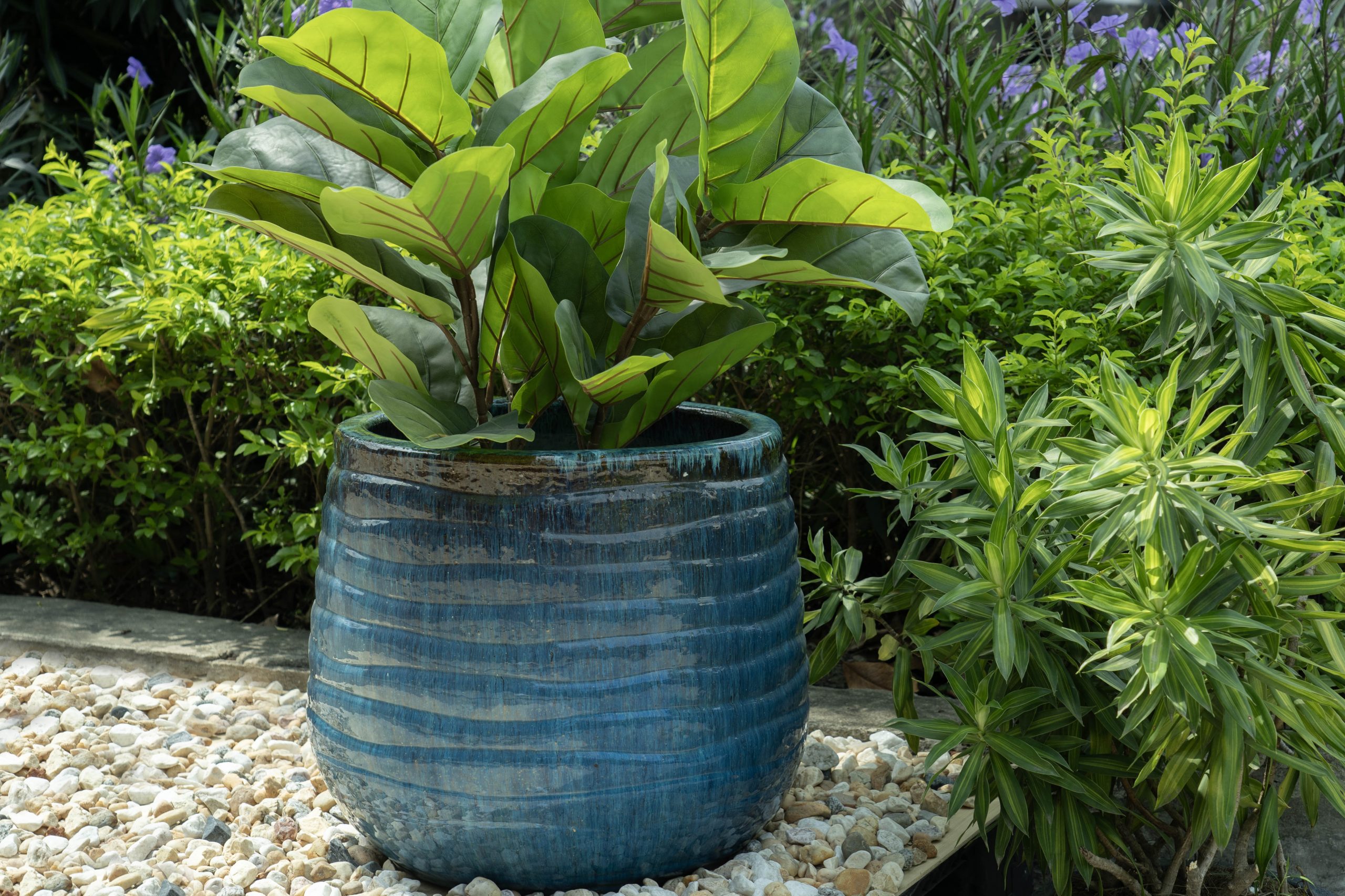
Polystone performs reliably in outdoor weather. The polystone resin absorbs little water, so it resists cracking when temperatures change. In addition, the surface holds color well when the factory applies a quality coating.
Light impacts usually scratch polystone rather than break it. However, real quality depends on the production process. For this reason, importers should choose suppliers with a clear QC system.
Fiber Concrete and Ceramic Serve Specific Design Segments
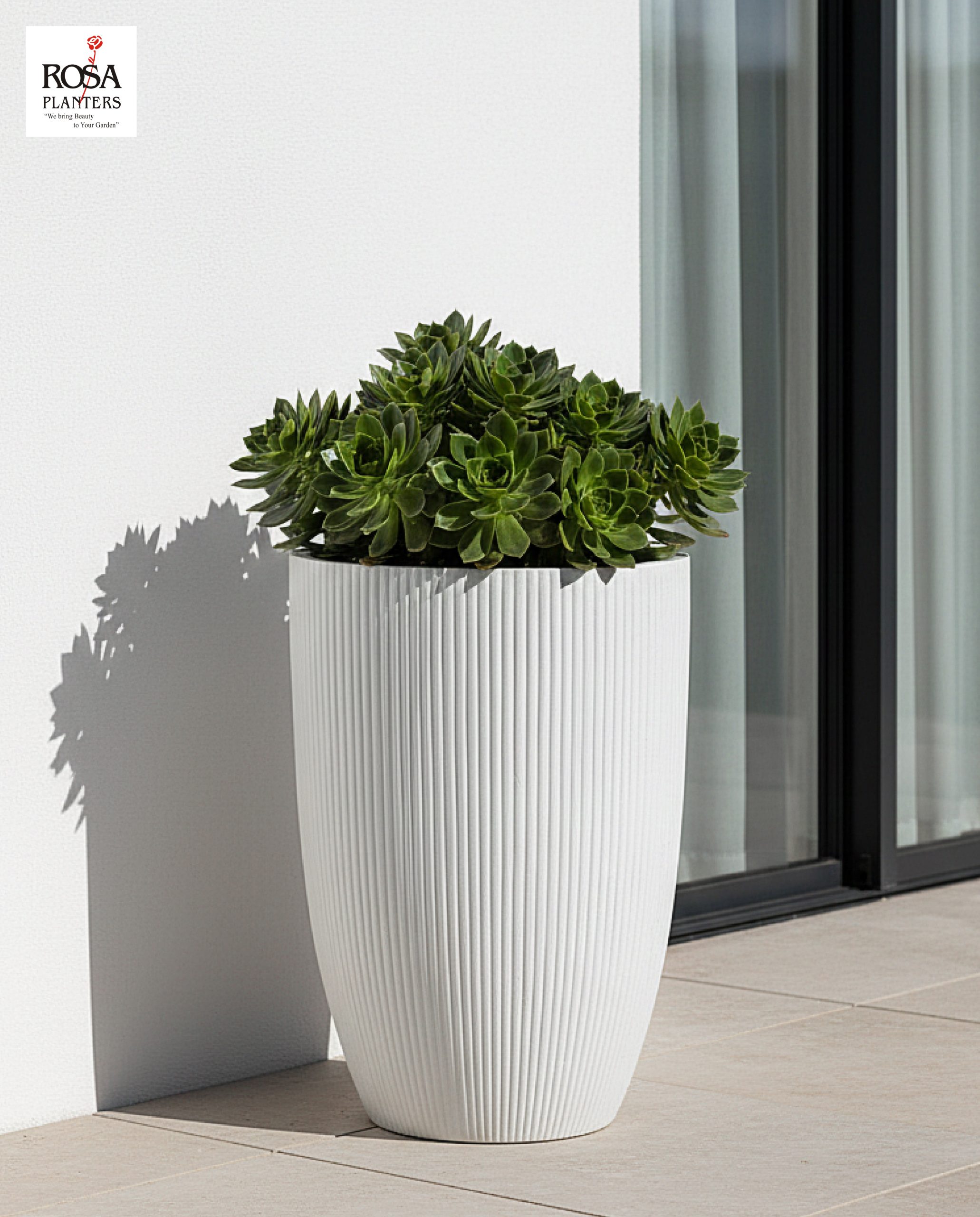
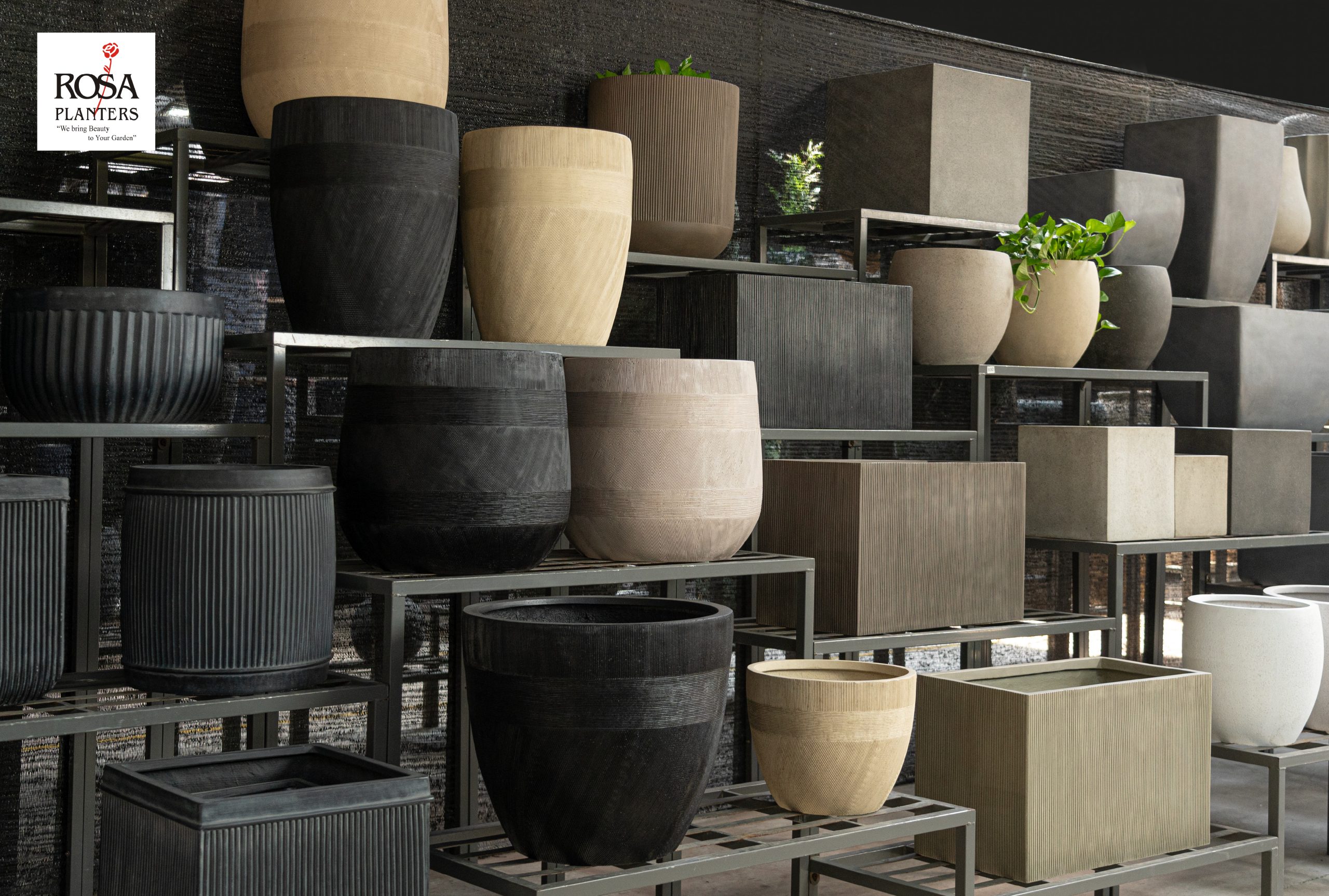
Fiber concrete offers a solid feel and a rustic look. However, it is heavy and chips easily at the edges. Ceramic provides a refined surface and many glaze options. Nevertheless, ceramic is brittle, so it cracks under thermal shock or impact.
Production Time: Lead Time Drives Capital Turnover
Beyond durability, production time affects cash flow and seasonal purchase planning. If a factory delivers late, importers miss peak season and lose revenue. Therefore, buyers should compare each material’s production cycle before ordering.
Average Production Cycle by Material
| Material | Average Production Cycle | Time-Consuming Stages |
| Fiber concrete (cement) | 1–3 weeks | Casting, drying, finishing |
| Ceramic | 3 weeks – 1 month | Shaping, drying, firing, glazing |
| Polystone (composite resin) | 5 days – 1 week | Molding, curing, finishing |
Why Polystone Shortens Lead Time
Fiber concrete needs time to dry and reach full strength. If a factory rushes this step, the product becomes weak or cracks. As a result, the 1–3 week cycle is hard to shorten.
Ceramic passes through more stages, including shaping, drying, firing, and glazing. Each firing batch depends on kiln capacity, so large orders often wait in a queue. Consequently, the ceramic cycle runs from 3 weeks to 1 month.
Polystone has the shortest cycle, at just 5 days to 1 week. The polystone resin cures quickly and needs no firing. Thus, factories turn over molds faster and ship sooner. In addition, changing colors or coatings is more flexible for custom orders.
Impact on Inventory and Cash Flow
A short lead time lets importers order closer to the selling season. Consequently, inventory levels drop and working capital turns faster. Furthermore, distributors can restock quickly when a design sells well.
However, the exact timeline still depends on quantity, size, and design complexity. Therefore, ask your supplier to confirm the production schedule in writing before you pay a deposit.
Breakage: The Hidden Cost Inside Landed Cost
After production, goods must survive the full shipping and handling chain. A low purchase price does not always deliver high profit. When a pot breaks, the importer loses both the goods and the freight already paid.
Ceramic Carries the Highest Damage Risk
Ceramic breaks most easily of the three materials. Even a small impact during loading can crack the pot or chip the glaze. Therefore, suppliers must use heavier packaging, and packing costs rise.
Polystone Reduces Damage Across the Supply Chain
Polystone has better elasticity, so it handles container vibration more reliably. Lighter goods also lower impact force during handling. As a result, damage rates stay lower, and importers handle fewer claims.
Fiber concrete sits in the middle. Pots rarely shatter completely, but the edges chip easily. In addition, heavy weight increases the risk during manual handling.
Shipping: Optimizing Freight from Factory to Warehouse
Breakage links closely to packaging and shipping methods. Freight also takes a large share of landed cost. Therefore, importers should evaluate material together with the loading plan.
Nesting and Packaging
Polystone pots often nest inside each other, if the design allows it. This method saves container volume. In addition, lighter goods need less protective filler.
Ceramic requires individual packing, so it takes more space and labor. Fiber concrete needs strong pallets and forklifts at both ends.
Comparing Freight by Option
Before you confirm an order, request quotations for several materials. Compare freight cost per pot instead of freight cost per container. This method reflects the true cost of each option.
Retail Margin: Combining All Costs
Margin depends on purchase price, freight, breakage, handling, and capital cost. Each factor ties back to the material. Therefore, importers should calculate landed cost instead of focusing only on ex-factory price.
The Real Landed Cost of Each Material
Ceramic often has an attractive ex-factory price. However, high freight and heavy losses can erode profit. Fiber concrete faces a similar problem because of its weight.
Polystone may cost slightly more at the factory. Even so, lower freight, fewer losses, and shorter lead time often offset the gap. As a result, polystone’s total cost stays competitive in many cases.
Advantages for Retailers and Designers
Lighter pots are easier for customers to carry and install. Designers also place large polystone decor pieces on balconies and rooftops with less effort. Moreover, durable products reduce warranty claims and increase repeat purchases.
Conclusion: Choose Materials by Total Cost of Ownership
Polystone balances weight, durability, lead time, and breakage well. Fiber concrete and ceramic still suit certain design segments. However, for profit planning, landed cost and delivery speed matter most.
Are you planning your next seasonal collection? Contact us to Request a Quotation / Shipping Cost Comparison. We will send you a quotation and compare freight costs across materials.
